
Arrest Warrants in DeWitt County
An arrest warrant is a magistrate's written order telling an officer to arrest someone accused of an offense. Texas Code of Criminal Procedure Chapter 15 lays out the complaint and probable-cause framework behind it. Which court issued the paper depends on the case level. DeWitt County district, county, JP, and municipal courts each keep records within their own jurisdiction. The Sheriff may serve the warrant, but serving it is not the same as keeping the file. For the record itself, contact the court named in a citation, notice, or case entry.
Chapter 15 Frames a DeWitt County Arrest Warrant
Chapter 15 spells out what belongs on the face of a DeWitt County arrest warrant. The heading names the State of Texas. It carries the accused person's name or a reasonably certain description, the offense charged, and the magistrate's signature. The statute also covers issuance on a sworn complaint supported by probable cause. That is the legal framework, though, not a promise that every field shows up in a public index. The signed process, the court file, and the current operational status can sit in different records. Ask the clerk which public copy or case entry exists, and whether a separate status confirmation is needed before you rely on it.
Statutes can change; confirm the current text before relying on a procedure.
What a DeWitt County Arrest Warrant Contains
DeWitt County publishes no public warrant schema, number format, or status-code list. A court file may tie process to a cause number, offense, issuing magistrate, issue date, bond instruction, service return, or later recall. Exact fields vary by clerk and access rules.
| Issuing authority | Court and magistrate that issued the process |
|---|---|
| Underlying case | Cause number and offense, where public |
| Process | Arrest warrant, capias, or another court term |
| Service or return | Separate officer record, if released |
| Current instruction | Ask the issuing clerk or counsel; do not guess from an index |
DeWitt County Arrest Warrant Files Stay With the District Clerk in Cuero
Felony cases in DeWitt County run through the 24th, 135th, and 267th District Courts. Those judges sit at the Victoria County Courthouse. The files don't follow them there. The DeWitt District Clerk keeps the county's felony papers in the Cuero courthouse at 307 N Gonzales Street. That office describes a paperless transition effective January 1, 2026 and points users to its current e-filing system. So for a district case, call the DeWitt District Clerk rather than treating a Victoria courtroom as the records counter. The clerk can identify the public case file. The issuing court or your counsel can explain the process and what happens next.
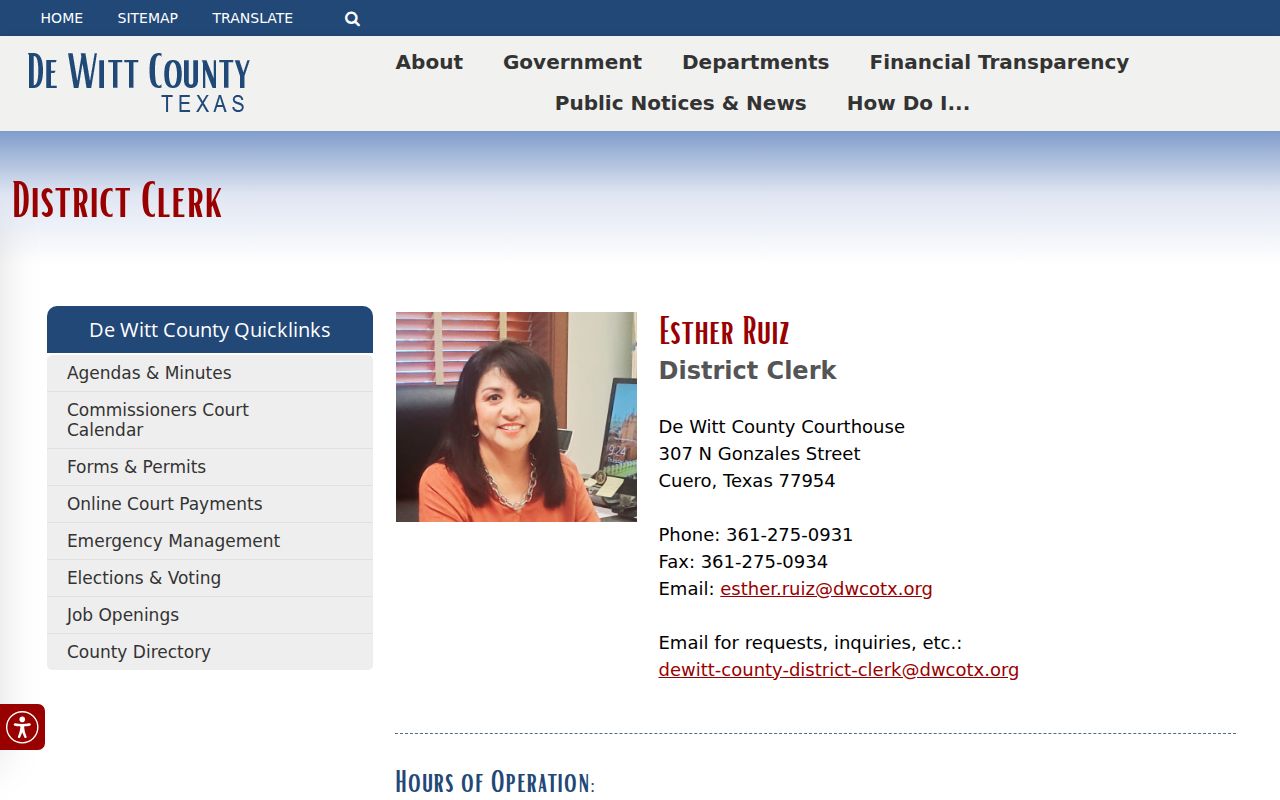
Office information was reviewed September 20, 2026; confirm hours and contact details before visiting.
How DeWitt County Arrest Warrants Are Served
Texas law lets peace officers execute process within the applicable rules. The DeWitt Sheriff lists service of warrants, capias, and writs among its regular work. Constables handle JP process. A city police department or another authorized officer may serve city or other process instead. Serving the paper is one job; keeping the case file or deciding whether a court recalls a warrant is another. For DeWitt County process, ask the issuing clerk about the record itself. If you need local law-enforcement confirmation, use the Sheriff's published in-person status route.
Arrest Warrant vs Summons vs Bench Warrant
A summons tells a person to appear. An arrest warrant authorizes an officer to take that person into custody. Missing a summons can bring later process when law and court procedure allow. But the citation alone doesn't prove a DeWitt County warrant followed.
| Record | Purpose | Question for the clerk |
|---|---|---|
| Summons | Orders an appearance | Is a new date set? |
| Arrest warrant | Authorizes arrest on a probable-cause basis | Which court issued it, and what should I do? |
| Bench/capias process | May follow a missed appearance or judgment | Is a hearing, payment, or recall required? |
The process label matters more than the shorthand in a search result.
DeWitt County Warrants Have Different Record Owners
Different DeWitt County warrants live with different record owners. A County Court misdemeanor file goes through the County Clerk. A district felony file goes through the District Clerk. JP matters belong to the right precinct, and municipal citations belong to the issuing city court. The Sheriff and constables execute process, but they don't replace those clerks. The court's location controls the route, not the town where you live. The Cuero office handles JP1 matters, while JP2 answers precinct-two questions from Yorktown. A city citation in Cuero should start with Cuero Municipal Court, not JP1. When the court name is unclear, ask the notice issuer to point you to the right custodian.
DeWitt County Arrest Warrant Access Can Be Limited
A public case index has limits in DeWitt County. It may omit a sealed filing, juvenile material, or information withheld under an investigative exception. Chapter 58 of the Texas Family Code protects juvenile warrant materials except for specified justice-system access, attorney access, or court permission. Chapter 552 also permits exceptions to public release. Frame a records request as a request for an existing public document from the correct custodian. It can't force protected material open. It also isn't a live warrant check.
DeWitt County Arrest Warrant Labels Differ by Court
These labels describe different procedural functions, not interchangeable names. An arrest warrant rests on a sworn complaint and probable cause. A summons is a command to appear. Bench or capias language often points to a missed court duty or post-charge process. Texas law and the case posture determine which one applies. The clerk can tell you what term appears on the official DeWitt County record. If your question is whether a warrant is current or how to address it, ask about counsel, a scheduled appearance, bond, or a motion before acting.
DeWitt County Arrest Warrant Bond Information Is Not a Disposition
The DeWitt County detention FAQ says inmate information may include charges and a bond amount, and it points to the official jail lookup. The jail does not maintain court dockets, though. A bond figure helps when someone is in custody. It does not show that a case is closed or that a warrant was recalled. Ask the jail about custody and bond procedure. Then contact the issuing clerk about the court date and the underlying case. The same split applies to city or JP process.
What to Do If There's a Warrant for You
Pick up the phone once you have the case number. Ask the DeWitt County clerk in the issuing court for the exact process name, its current status, and what steps the court accepts. From there, the record may point a person toward counsel, a set appearance date, bond, or a motion. DeWitt County posts no countywide bond schedule, and no single recall form covers every court.
Confirm the court’s instructions and whether counsel is needed before appearing or paying. Ask how the court will document recall or release.
After the court rules, get the outcome in writing and ask whether a separate DPS/OmniBase update follows. The home page's warrant-resolution section lists the DeWitt County follow-through questions.
DeWitt County Arrest Warrant Service and Return Records
In DeWitt County records, an issued warrant, a service attempt, and a court return can each sit in its own document. Chapter 15 sets rules on making authority known and on public inspection of an executed warrant and its affidavit, subject to the statute. A records custodian may still have to weigh confidentiality or active-investigation exceptions before releasing anything. When you request a file, name the court or Sheriff record type you want and give a date range or cause number. Ask which version is open to the public, and whether the file holds a later recall, a service return, or an amended entry.