
Bench Warrants in DeWitt County
People say "bench warrant" when court process follows a missed appearance, a failure to comply, or contempt. Texas justice and municipal courts often use sharper terms: arrest warrant, capias, or capias pro fine. DeWitt County posts no single bench-warrant list. The citation or case number points you to the right clerk. That clerk is the one to call. Do not assume the Sheriff's jail lookup, a County Clerk index, or a city page shows every lower court. The office that issued the process controls its instructions and any recall.
DeWitt County Bench Warrants: Capias Pro Fine Has a Different Posture
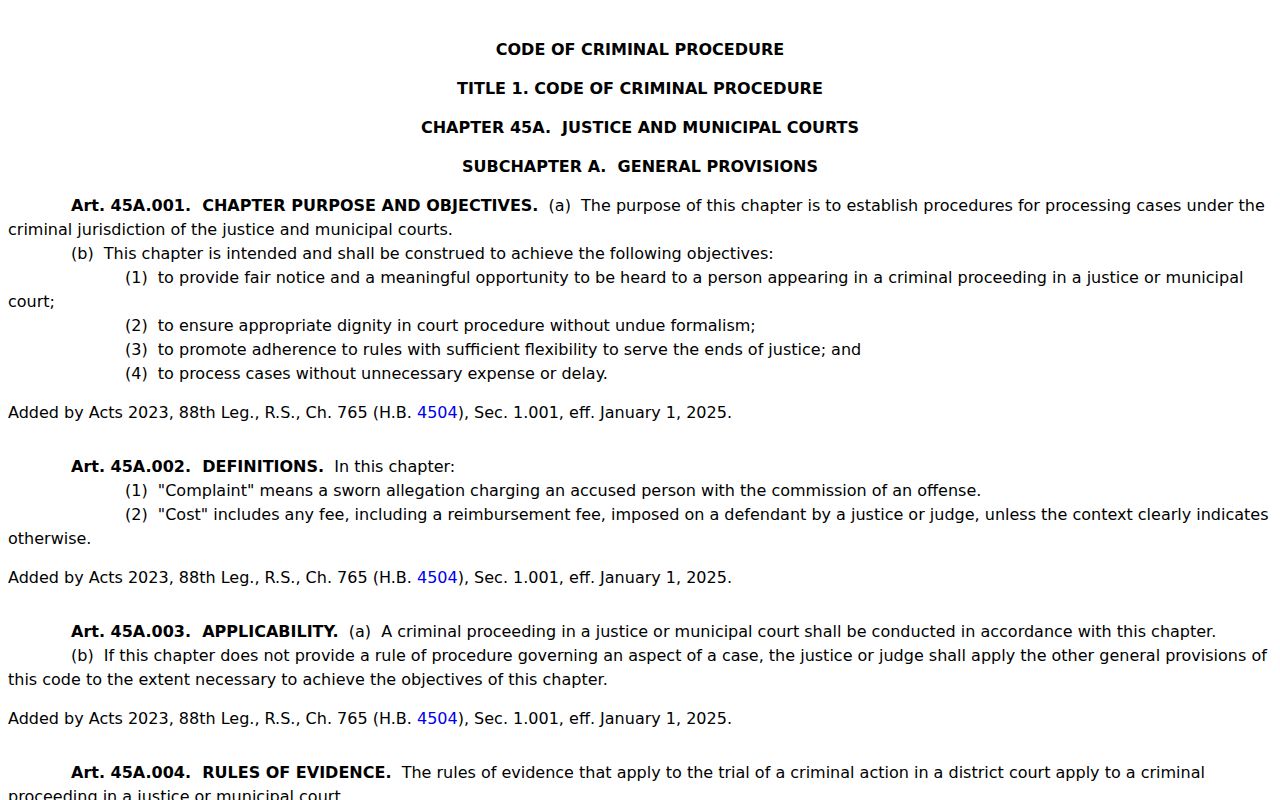
Capias pro fine is the label for process that comes after judgment. It follows nonpayment or another broken court requirement. Chapter 45A governs the justice and municipal procedure here too. That chapter builds in notice, a hearing, ability-to-pay review, and recall rules, so a judge may insist on setting a hearing rather than accepting money through a generic payment screen. Yoakum's standing order borrows the same vocabulary for its municipal cases. It is a local document, though. Nothing in it binds JP1, JP2, Cuero, Yorktown, or Nordheim countywide. Before choosing a response, ask the DeWitt County issuing clerk whether your matter sits before judgment or after it.
How a Bench Warrant Is Issued
Missing a setting tells you little by itself. The court decides what comes next. A judge or magistrate can enter a warrant or capias once the case event and the required procedure have run their course. For a JP or municipal file, Chapter 45A supplies the state framework. A felony or county criminal case follows the court's own authority and docket instead. Call the DeWitt County clerk with your case number. Ask for the issue date, the exact process name, the next setting, and whether the court wants an appearance, a motion, bond, or some other step. Keep a copy of any notice or citation so the clerk can route the question, and confirm which DeWitt County court issued the process.
DeWitt County JP1 Uses a Warrant Postcard Notice
DeWitt County explains the JP postcard plainly. Ignore a traffic violation, skip a fine payment, or fail to return property, and a warrant postcard may arrive in the mail. The county's notice says the warrant stays active until it is properly resolved. Contact JP1 for instructions. Have your name, date of birth, and Texas DL or ID number ready. The office sits at 208 E Live Oak Street, Suite D, in Cuero. The listed phone number is 361-275-3443. Send identifying details only through an official clerk channel, never a driver license number on some unverified form.
That postcard notice is a JP1 explanation. JP2 and the DeWitt County city courts may format their notices differently.
Bench Warrant vs Arrest Warrant
People use the words loosely. In DeWitt County practice, though, they answer different questions. One warrant can authorize arrest on a sworn complaint, while a bench warrant usually tracks a missed court obligation. A capias pro fine ties back to a judgment and may open a hearing or payment route instead.
| Question | Arrest warrant | Bench or capias process |
|---|---|---|
| Common trigger | Probable-cause complaint | Missed date or post-judgment noncompliance |
| Where to start | Issuing court or counsel | Court that set the appearance or obligation |
| Next step | Ask about process, bond, and counsel | Ask about appearance, hearing, payment, or recall |
In DeWitt County, trust the court's label, not the charge name.
DeWitt County JP1 and JP2 Bench Warrant Questions Go to Separate Offices
JP1 sits in Cuero. JP2 sits in Yorktown. That split follows precinct jurisdiction, not where a person lives. JP2 posts its own contact and court materials but no public active-warrant table. Call and ask. A citation marked Precinct 2 means the JP1 postcard number proves nothing about who holds your DeWitt County file. Use the county's warrant PDF for JP1. For JP2, the official JP2 contact page is the right place to ask about the current case process and any appearance instruction.
A DeWitt County Summons Does Not Prove a Bench Warrant
A summons and a bench warrant do two different jobs. One tells you to show up. The other lets an officer bring you in. A missed summons in DeWitt County can trigger a warrant later, if the procedure allows it, but the paper alone proves nothing about one being issued. The flip side matters too. A warrant that never shows up in an online index does not mean the case has no active process. Ask the clerk to separate the original charge from whatever process came after it. A case can stay open after a warrant is recalled, and paying may not clear every obligation the court imposed.
Yoakum’s DeWitt County Bench Warrant Uses a Dated Standing Order
Yoakum sits partly in DeWitt County, and its municipal court materials describe a judge who serves as a magistrate and may issue bench warrants. The city's 2020 standing order covers a lot of ground. It addresses failure to appear, capias and capias pro fine, show-cause procedure, recall upon appearance, license reporting, and collection referral. Because that order carries a date, confirm current steps with the municipal clerk at 361-293-6321, extension 261 on the payment page. Note the two addresses serve different functions. The court sits at 900 Irvine Street. Payments route through City Hall at 808 Hwy 77A South, so ask first where a hearing or clerk appointment will happen before you drive out.
How to Resolve a DeWitt County Bench Warrant
Call the issuing court first. Ask what step clears the DeWitt County bench warrant. A payment, bond, motion, or scheduled appearance may work. The clerk can say whether paying recalls the warrant or only lowers the balance, since DeWitt County publishes no single recall or surrender form.
Get the court’s instruction before paying or appearing. A receipt for money does not necessarily show that the warrant was recalled or the case closed.
Once the court acts, get the confirmation in writing and ask whether an FTA/FTP report went to DPS. The DeWitt County resolution overview covers the Sheriff and license-clearance routes.
Which DeWitt County Court Issued It
Municipal courts handle their city matters; JP courts handle precinct cases; the County Clerk keeps County Court criminal files; and the District Clerk holds district felony files. DeWitt felony records remain with the Cuero District Clerk even though the district judges sit in Victoria. A case number or citation usually gives the best starting clue.
The Sheriff can serve process, but the issuing clerk answers what court action is outstanding. If the underlying matter is family or juvenile, separate court and confidentiality rules may apply.
Questions to Ask the DeWitt County Clerk About a Bench Warrant
Work through a short list on the phone. Is the warrant active? Do you need a hearing or a personal appearance? Is a bond amount current? What document proves the recall? Also ask whether the court reported an FTA/FTP notice to DPS and whether another court holds a separate obligation. Use the jail only for someone already in custody and questions about bond or detention. The Sheriff FAQ says the jail keeps no court dockets, so the DeWitt County clerk is the source for the next court date.
DeWitt County Bench Warrant Records May Be Restricted
Texas public-record law opens many files but not all. Juvenile warrant material stays confidential except for justice-system access, attorneys, or court permission. Sealed records and some active-investigation details may be withheld too. A public index may show less than the issuing court holds. Ask the DeWitt County clerk which portion can be released and how a completed resolution is documented.